
Whether you’re building a house or looking to upgrade your home with insulation to save money on heating and cooling costs? The days of filling wall cavities with straw and mud, sawdust, cotton, and old newspapers are long gone. Insulation has evolved from the early 1900s when asbestos hit the industrial revolution to the introduction of fiberglass products in the 1930s, cellulose in the 1950s, and polyurethane foam applications in the 1980s.
The evolution of insulation over the centuries has shaped a broad range of energy-efficient products currently available on the marketplace today. Today’s selection of insulation products is more energy-efficient and far superior when compared to primitive applications. When it comes to choosing the right insulation for your home? One of the biggest factors is, selecting an insulation product with the recommended R-value for the specific area you want to insulate.
The R-value is the maximum thermal performance rating of the insulation product, and its effectiveness is dependant on correct installation. Although most homeowners can install some types of insulation materials such as batts or rolls, professional installation is required for most other materials like sprayed, blown-in or loose-fill insulation applications.
Below are some common types of insulation, where it can be used, and the pros and cons of each type:
Blanket Insulation
Blanket insulation comes in the form of batts or rolls with or without the paper facing. It’s generally made with fiberglass, mineral rock, and wool as well as some plastic and natural fiber materials. Blanket insulation is typically used in unfinished walls, floors, and ceilings, and it can be installed between beams, joists, and studs. Batts or rolls with the fire-resistant paper facing typically have edges that can be folded over and stapled to the framing members.
Pros
- DIY installation
- Fairly inexpensive
- Excellent insulation properties
- Long service life
Cons
- Irritates skin during installation
- Ineffective if it becomes wet
- Loose-fill or Blown-in Insulation
Loose-fill and blown-in insulation both contain a lot of the same materials as blanket insulation; however, it contains cellulose, which is a polymer that holds the materials together. It can also be used in the same areas as blanket insulation, but requires professional installation. The areas to be insulated are generally covered with plastic because the material needs to be poured or blown-in with specialized equipment.
Pros
- Works well for irregular-shaped areas
- Can be used for extra insulation in finished areas
- Excellent R-value properties
- Great for hard to reach areas
Cons
- Professional installation
- Fairly expensive
- Polyurethane Foam Boards
Polyurethane foam boards provide a high R-value, especially for its rather small thickness. Foam boards can be used for both exterior and interior wall applications such as unfinished walls, foundation walls, floors, ceilings, unvented low-slope roofs, trenches for pipes, and even the exterior walls of septic tanks. Professional installation for foam board applications is highly recommended.
Pros
- Faster installation
- Fairly inexpensive
- Moisture resistant
- Blocks thermal short cuts
Cons
Interior applications require fire-rated materials such as 1/2 inch gypsum wallboard
Exterior applications require a weather-proof facing such as Tyvek housewrap
Concrete Block Insulation
Concrete block insulation is concrete blocks that have injected air into the concrete mixture that increases the R-value of the blocks. They can be used for foundation walls, unfinished walls, and new construction projects. The exterior side of the concrete blocks can also have foam board insulation applied, which increases their energy efficiency. This application should be installed by a professional insulator to ensure proper installations. Most concrete block insulation comes in either autoclaved aerated or cellular concrete masonry units.
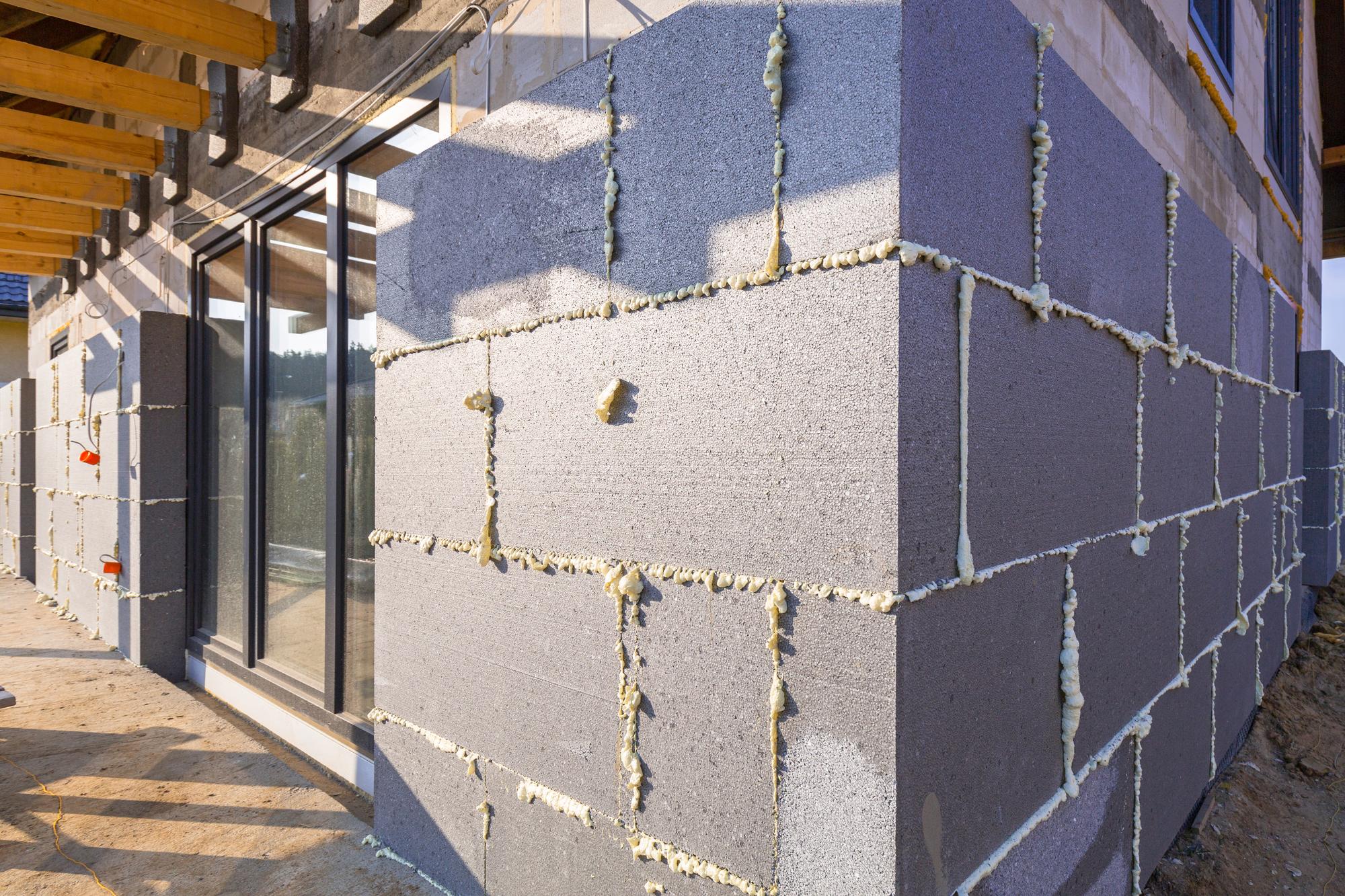
Pros
- 10X the insulating value of standard concrete
- Exceptional service life
- Durable and eco-friendly
- Can be used as part of the structure design
Insulating Concrete Forms
Insulating concrete forms (ICFs) are concrete foam blocks or foam boards, and they can be used for unfinished walls or foundation walls for new construction. There are many commercial buildings in today’s construction industry being built with ICFs. The ICF system is literally built into the walls of the home or building, which creates robust thermal resistance. Installing IFCs is not a DIY project. An IFC system should be installed by a certified insulation contractor.
Pros
- High thermal resistance
- Enhanced room temperature control
- Adds structural integrity
- High R-value
Cons
- Expensive
- Requires professional installation
Other Types of Insulation
There are several types of insulation products available for a variety of applications such as pipes, water lines, hot water heaters, electrical wires, automotive heat shields, duct work, and more. If you want more information on insulating your home or commercial building? Fill out the contact form and start saving money today on your heating and cooling costs.